
What does LOW-HANGING FRUIT mean?

What’s the meaning of LOW-HANGING FRUIT? How and when to use this expression naturally in English.
English has many expressions based on everyday images, and low-hanging fruit is one of the most common. Native speakers often use it in business, productivity, marketing, problem-solving, and daily conversations when talking about easy opportunities or quick wins.
In this guide, you will learn the meaning of low-hanging fruit, how to use it naturally, common examples, where it comes from, and when it sounds appropriate in real English.
Low-Hanging Fruit | meaning
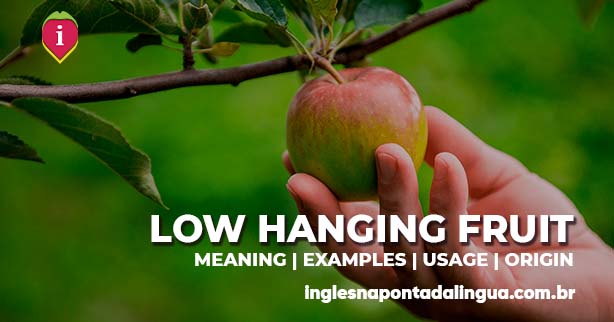
The expression low-hanging fruit means:
- an easy opportunity
- a task that can be completed quickly
- a simple problem to solve
- the easiest result to achieve first
- something valuable that requires little effort
Simple Explanation
Imagine fruit hanging low on a tree. You can reach it easily without climbing.
That image became a metaphor. In English, low-hanging fruit means something easy to get or accomplish.
For example, if a company wants quick improvements, fixing obvious mistakes may be the low-hanging fruit.
Examples of Low-Hanging Fruit
- Improving the website homepage is low-hanging fruit.
- Let’s focus on the low-hanging fruit first.
- Cutting unnecessary expenses was the low-hanging fruit.
- These small errors are low-hanging fruit we can fix today.
- For quick sales growth, existing customers are low-hanging fruit.
- Updating your resume is low-hanging fruit in a job search.
- The manager targeted low-hanging fruit before larger changes.
- Better customer follow-up is low-hanging fruit for the team.
- We should handle the low-hanging fruit before starting complex tasks.
- Social media ads were low-hanging fruit for early results.
When and Where to Use Low-Hanging Fruit
The phrase low-hanging fruit is especially common in business and work settings. People use it when discussing quick wins, simple improvements, or tasks that bring results fast.
It is also common in productivity conversations, marketing strategy, sales, and project management.
For example:
- Let’s fix the low-hanging fruit first.
- There’s still some low-hanging fruit in this market.
The tone is informal to semi-formal. It sounds natural in meetings, emails, presentations, and everyday conversations.
This expression usually has a positive meaning because it focuses on practical opportunities.
However, it can sometimes suggest that people are only choosing easy tasks and avoiding harder challenges.
For example:
- Positive: We captured the low-hanging fruit quickly.
- Slightly critical: They only focus on low-hanging fruit and ignore bigger issues.
Tone and context matter.
Origin of the Expression
The phrase comes from the literal image of fruit hanging low on a tree, where it can be picked easily without extra effort.
Over time, English speakers turned this image into a metaphor for easy gains, quick results, or simple opportunities.
Today, it is widely used in modern business English.
In a Nutshell…
Low-hanging fruit means an easy opportunity, quick win, or simple task that can bring results with little effort. It is common in business, marketing, productivity, and everyday English.
If someone says, Let’s go after the low-hanging fruit, they mean starting with the easiest and most accessible opportunities first.
Learning expressions like low-hanging fruit helps you understand real English and communicate more naturally.
If someone says, Let’s go after the low-hanging fruit, they mean starting with the easiest and most accessible opportunities first.
That’s it!