What does “PUT ONE’S THINKING CAP ON” mean?

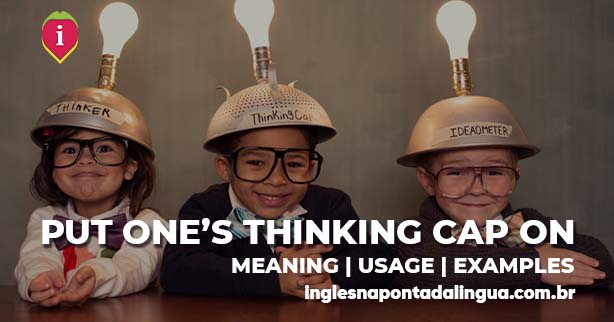
The expression put one’s thinking cap on means to start thinking seriously, usually to solve a problem, find an idea, or make a smart decision.
When someone says this, they are not talking about a real cap. It is an idiom commonly used in everyday English, especially at work, school, or when facing a challenge.
In simple terms:
It means “think carefully and creatively.”
How Is “Put One’s Thinking Cap On” Used?
This expression is often used when:
- A solution is needed
- A problem is difficult
- Creativity or logic is required
It can be used in spoken English, informal writing, and even in professional contexts.
Structure
- Put + possessive adjective + thinking cap on
Examples of possessive adjectives:
- my, your, his, her, our, their
Examples
Here are natural, real-life examples you might hear from native speakers:
- We need to put our thinking caps on if we want to finish this project on time.
- The exam question was tough, so I really had to put my thinking cap on.
- Let’s put our thinking caps on and come up with a better solution.
- If you want to save money, you’ll need to put your thinking cap on.
- The team put their thinking caps on and fixed the problem quickly.
These examples show that the expression is often used with we, you, or they, especially when people work together.
The Origin of “Put One’s Thinking Cap On”
The expression comes from the idea that wearing a special cap helps you think better.
In the 19th century, children in schools were sometimes told to wear a “thinking cap” when they needed to concentrate more. Over time, the cap became symbolic, not real.
Today, the expression survives as a figurative way to say “focus your mind.”
Synonyms and Similar Expressions in English
Here are common synonyms that express a similar idea:
Neutral / General Synonyms
- Think hard
- Focus
- Use your brain
- Give it some thought
Examples:
- Think hard before you decide.
- Give it some thought and let me know.
Informal Expressions and Slang with a Similar Meaning
In spoken and informal English, you may hear:
- Put your brain to work
- Put your head together (usually plural: teamwork)
- Rack your brains
- Get your head around it
Examples:
- Let’s put our heads together and solve this.
- I’m racking my brains trying to remember his name.
- It took me a while to get my head around the problem.
These expressions are very common in British and American English.
When Should You Use This Expression?
You should use put one’s thinking cap on when you want to:
- Sound natural and idiomatic
- Encourage problem-solving
- Speak in a friendly but intelligent way
It works well in:
- Conversations
- Meetings
- Classes
- Blogs and articles
- Emails (semi-informal)
Final Tip for English Learners
Learning expressions like put one’s thinking cap on helps you:
- Sound more natural
- Understand native speakers better
- Express ideas beyond literal vocabulary
Instead of saying only “think”, you gain variety, nuance, and fluency.
So next time English feels challenging, put your thinking cap on and keep going. 😊