What Does DANCE ON SOMEONE’S GRAVE mean?

What’s the meaning of DANCE ON SOMEONE’S GRAVE? How and when to use this expression naturally in English.
Some English expressions sound dramatic—and dance on someone’s grave is definitely one of them. It’s powerful, emotional, and not something you’ll hear in light conversation. But what does it really mean? And when, if ever, should you use it? In this article, you’ll learn the meaning, usage, and context of this striking expression.
Meaning of Dance on Someone’s Grave
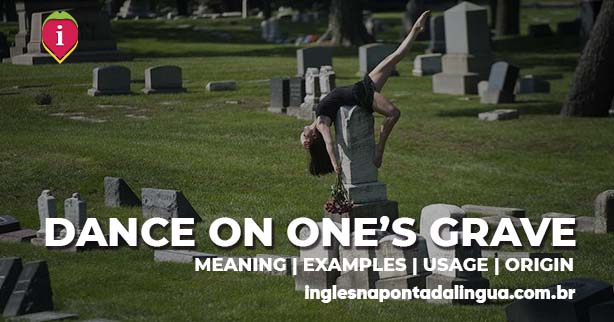
The expression dance on someone’s grave means to show extreme happiness or satisfaction after someone dies or fails—especially if you disliked that person.
In simpler terms, it describes celebrating someone’s downfall or death in a very disrespectful way.
👉 Key idea:
- strong dislike or hatred
- satisfaction at someone’s misfortune
- emotional or exaggerated reaction
It’s important to understand that this expression is often used figuratively, not literally.
Examples of Dance on Someone’s Grave
Here are natural examples that show how this Dance on Someone’s Grave is used:
- He hated his former boss so much he said he would dance on his grave.
- Some people were practically dancing on his grave after the scandal.
- She would never dance on someone’s grave, even if she disliked them.
- The media accused critics of dancing on the politician’s grave.
- He joked that his rivals would dance on his grave if he failed.
- They celebrated the company’s collapse like they were dancing on its grave.
- It felt like people were dancing on his grave after he lost everything.
- She warned them not to dance on someone’s grave. It shows a lack of respect.
- Even in defeat, he knew some would dance on his grave.
- Social media was full of comments dancing on the celebrity’s grave.
When and How to Use This Expression
This expression is strong, emotional, and often negative, so it must be used carefully.
👉 Common contexts:
- politics and public figures
- scandals or public failures
- personal conflicts or rivalries
- media commentary
💡 Tone and nuance:
- often critical or disapproving
- can be used ironically or humorously, but with caution
- may sound harsh or offensive depending on context
⚠️ Important:
- Not suitable for polite or formal conversations
- Best used in storytelling, commentary, or expressive speech
- Often appears in journalism, opinion pieces, or dramatic narratives
👉 Natural use:
- “Critics were quick to dance on his grave after the controversy.”
- “It’s not right to dance on someone’s grave, even if you disagree with them.”
Origin of Dance on Someone’s Grave
The expression comes from a literal image of dancing on someone’s burial site, which would be seen as deeply disrespectful in most cultures.
While there’s no single documented origin, the phrase likely developed as a metaphor for extreme disrespect or hostility, especially after someone’s death.
Over time, it became a figurative way to describe celebrating someone’s downfall, even when no physical “grave” is involved.
In a Nutshell…
To sum up, dance on someone’s grave is a vivid and powerful expression used to describe celebrating someone’s failure or death in a disrespectful or extreme way.
Because of its strong emotional tone, it should be used carefully and in the right context. When used appropriately, it can add intensity and clarity to your communication—especially in discussions about conflict, rivalry, or public reactions.