
SLINK AWAY | What’s This Phrasal Verb Mean?

What does SLINK AWAY mean? What’s the meaning of SLINK AWAY? How and when to use this phrasal verb?
In short, This phrasal verb appears frequently in movies, novels, conversations, and real-life situations where someone leaves quietly, often to avoid attention, embarrassment, or confrontation.
But keep reading to learn the meaning of slink away, see real-life examples, understand its usage and register, and discover how to use this phrasal verb naturally and confidently.
What Does SLINK AWAY Mean?
The phrasal verb slink away means:
to leave quietly and secretly, usually because you feel embarrassed, guilty, afraid, or don’t want to be noticed
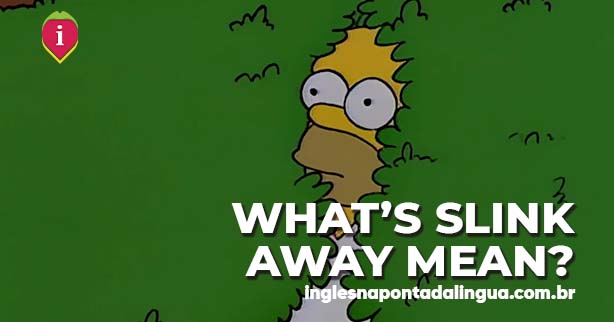
The verb slink itself already carries the idea of moving quietly and cautiously, almost like an animal trying not to be seen. When combined with away, the meaning becomes even clearer: someone leaves a place silently and discreetly.
Imagine a student who realizes they entered the wrong classroom. Instead of announcing the mistake, they simply slink away. Or imagine someone who said something awkward at a party and then quietly disappears — they slink away.
There is often an emotional element behind slink away, such as:
- embarrassment
- guilt
- shame
- fear
- discomfort
- awkwardness
It’s not just leaving. It’s leaving quietly, almost hoping nobody notices.
Examples of SLINK AWAY
Here are some natural, real-world examples of how slink away is used:
- When he realized everyone was staring at him, he quietly slunk away.
- She tried to slink away before anyone could ask her questions.
- The dog slunk away after being scolded by its owner.
- He made an awkward joke and then slunk away in embarrassment.
- Not wanting to interrupt, she slunk away from the conversation.
- The employee slunk away after being caught checking social media.
- He slunk away from the meeting without saying goodbye.
- She noticed her ex across the room and decided to slink away.
- The child slunk away after breaking the vase.
- Realizing he was in the wrong place, he slunk away quietly.
Notice how in all these examples, the person or animal leaves quietly and often because of an uncomfortable situation.
Usage, Register, and Important Notes About SLINK AWAY
1. Neutral but vivid and expressive
Slink away is not slang, but it is more expressive than simply saying “leave” or “go away.” It adds emotional depth and visual imagery.
Compare:
- He left the room.
- He slunk away from the room.
The second sentence tells a story. You can imagine how he left.
2. Very common in storytelling
This phrasal verb is especially common in:
- storytelling
- novels
- movies
- conversations describing past situations
- narrative writing
It helps create vivid mental images.
3. Often associated with embarrassment, guilt, or avoidance
Most of the time, people slink away because they want to avoid attention. This emotional nuance is essential.
It is rarely used for neutral or confident departures.
You would not say:
❌ He proudly slunk away.
That contradicts the emotional meaning of the phrasal verb.
4. Irregular verb form: slink → slunk → slunk
The past simple and past participle forms are usually:
- Past: slunk away
- Past participle: slunk away
Examples:
- He slunk away after the meeting.
- She has slunk away without saying anything.
5. Common subjects: people and animals
Animals are often described as slinking away, especially dogs, cats, or other animals acting cautiously.
Example:
- The cat slunk away into the shadows.
This reinforces the quiet, cautious movement idea.
In a Nutshell…
The phrasal verb slink away means to leave quietly and discreetly, usually because of embarrassment, guilt, fear, or discomfort. It is widely used in storytelling, conversations, and descriptive situations where emotional nuance matters.
By learning and using phrasal verbs like this, you move beyond basic English and begin to communicate in a more natural, expressive, and fluent way.
If your goal is to truly understand and use English as it is spoken in real life, mastering phrasal verbs is a powerful step forward.


