What Does STIR UP A HORNET’S NEST Mean?

What’s the meaning of STIR UP A HORNET’S NEST? How and when to use this expression naturally in English.
If you’ve ever heard someone say, “Don’t stir up a hornet’s nest,” you probably sensed it wasn’t about insects. This vivid English expression is commonly used to describe situations that can quickly become chaotic or full of trouble. In this guide, you’ll learn exactly what it means, how to use it naturally, and how to recognize it in real-life conversations.
What Does “Stir Up a Hornet’s Nest” Mean?
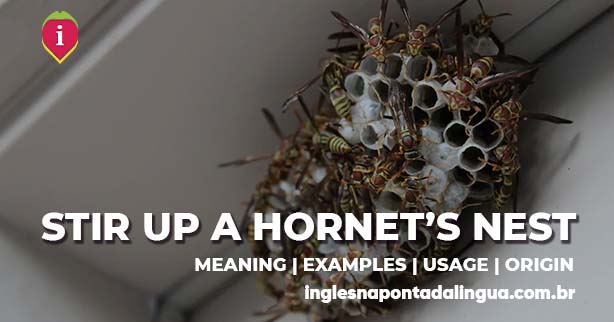
The expression stir up a hornet’s nest means to cause trouble, anger, or a strong negative reaction by interfering in a situation.
It often implies that:
- the situation was already sensitive
- someone did something that made it worse
- the reaction is intense and hard to control
In simple terms:
👉 stir up a hornet’s nest = create a lot of trouble or provoke strong reactions
Think about a real hornet’s nest: if you disturb it, the hornets will come out aggressively. That’s exactly the idea behind this expression.
Examples of “Stir Up a Hornet’s Nest”
Here are natural examples to show how this expression is used in everyday English:
- He stirred up a hornet’s nest by criticizing the team publicly.
- Don’t stir up a hornet’s nest by bringing up that topic again.
- The journalist stirred up a hornet’s nest with that controversial article.
- She didn’t mean to stir up a hornet’s nest, but her comment upset everyone.
- The decision stirred up a hornet’s nest among employees.
- If you question their authority, you’ll stir up a hornet’s nest.
- His tweet stirred up a hornet’s nest online.
- They stirred up a hornet’s nest by changing the rules suddenly.
- Bringing that issue back will only stir up a hornet’s nest.
- The new policy stirred up a hornet’s nest of complaints.
When and How to Use “Stir Up a Hornet’s Nest”
The expression stir up a hornet’s nest is commonly used in:
- Informal and semi-formal contexts
- News articles and media headlines
- Conversations about conflict or controversy
It is especially useful when talking about:
- Sensitive topics (politics, workplace issues, relationships)
- Public reactions (social media, news, debates)
- Situations where actions lead to unexpected backlash
💡 Tip:
This expression almost always carries a negative meaning, suggesting that something unnecessary or risky caused trouble.
The Origin of “Stir Up a Hornet’s Nest”
This expression comes from a very clear and powerful image: disturbing a real hornet’s nest.
Hornets are known for being aggressive when their nest is threatened. If someone stirs or shakes a nest, the hornets will attack quickly and in large numbers.
Over time, this image became a metaphor in English for provoking strong and often dangerous reactions in social or personal situations.
In a Nutshell
This idiom is a vivid and memorable idiom that means causing trouble or provoking strong negative reactions.
Now you know:
- What it means
- How to use it naturally
- Real-life examples
- When it is most appropriate
By learning expressions like this, you’ll sound more natural and expressive — and better understand how English is really used in real situations.
» This blog post was first published in Portuguese on September 10, 2018