What does DIP INTO ONE’S POCKET mean?

What’s the meaning of DIP INTO ONE’S POCKET? How and when to use this expression naturally in English?
If you’ve ever had to spend your own money — especially when you didn’t really want to — this is exactly the kind of situation where English speakers might use this expression. In this guide, you’ll learn how to understand and use dip in one’s pocket naturally and confidently.
The meaning of DIP INTO ONE’S POCKET
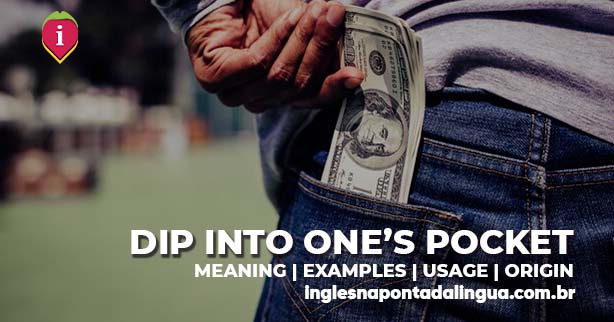
The expression dip into one’s pocket (more commonly heard as dip into one’s pocket) means to spend your own money, often reluctantly or unexpectedly.
In simple terms, it refers to:
- Using your personal money to pay for something
- Covering a cost yourself (sometimes unwillingly)
- Spending money you hadn’t planned to spend
It often carries a subtle emotional tone — people usually use it when they feel the expense is inconvenient, unfair, or surprising.
Examples with DIP INTO ONE’S POCKET
Here are some natural examples showing how the expression is used:
- I had to dip into my pocket to fix the car after the accident.
- She dipped into her pocket to cover the extra expenses.
- We might have to dip into our pockets if the budget isn’t enough.
- He didn’t expect to dip into his pocket for the repairs.
- They had to dip into their pockets to fund the project themselves.
- I really don’t want to dip into my pocket for this mistake.
- She ended up dipping into her pocket to pay for everyone’s meal.
- If the company won’t pay, we’ll have to dip into our pockets.
- He hates dipping into his pocket for things that aren’t his responsibility.
- We’ve already dipped into our pockets too many times this year.
When and How to Use This Expression
This expression is commonly used in situations involving:
1. Unexpected expenses
When you didn’t plan to spend money, but you have no choice.
2. Personal financial responsibility
Especially when institutions, companies, or other people should have paid — but didn’t.
3. Mild frustration or reluctance
The expression often implies a feeling like: “I shouldn’t have to pay for this.”
4. Informal and conversational English
It’s widely used in everyday speech, discussions about money, and even news or business contexts.
5. Common patterns
- dip into my/your/his/her pocket
- have to dip into our pockets
- end up dipping into one’s pocket
It can also be DIP IN ONE’S POCKET.
The Origin of the Expression
The expression comes from the literal action of putting your hand into your pocket to take out money.
In the past, people carried cash physically in their pockets, so “dipping into your pocket” was exactly what you did when paying for something.
Over time, this physical action became a metaphor for spending your own money — especially in situations where you would rather not.
In a Nutshell…
Dip in one’s pocket means to spend your own money, often reluctantly or unexpectedly.
It’s a natural, everyday expression that reflects real-life situations — especially when dealing with expenses, responsibilities, and financial pressure.
Learning expressions like this helps you move beyond textbook English and communicate more naturally and precisely.