
What does LIKE DEATH WARMED UP mean?

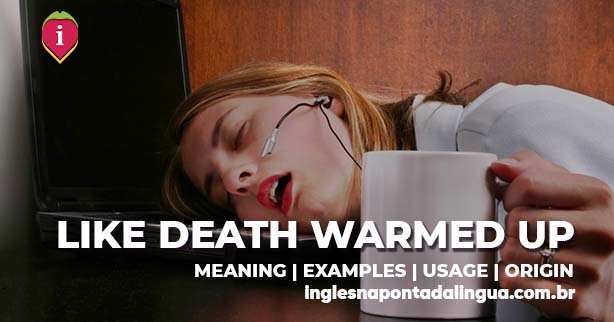
English has many colorful expressions, and like death warmed up is one of the most vivid ones. If you hear someone say, “You look like death warmed up,” they are not talking literally about death. They are using a humorous and dramatic idiom to describe someone who looks extremely tired, sick, pale, exhausted, or generally unwell.
In this guide, you will learn the meaning of like death warmed up, how native speakers use it, where it came from, and how to understand it naturally in everyday English.
What Does LIKE DEATH WARMED UP Mean?
The expression like death warmed up means:
- looking very tired
- looking sick or weak
- appearing pale and exhausted
- looking physically unwell
- seeming drained of energy
It is often used humorously, but it can also sound blunt depending on tone and context.
Simple Explanation:
If someone did not sleep, has the flu, or feels terrible, another person may say:
- You look like death warmed up.
That means the person looks awful, tired, or ill.
Important Note:
This expression usually describes appearance, not necessarily actual danger or serious illness.
Examples with LIKE DEATH WARMED UP
- After working all night, he looked like death warmed up.
- You should go home and rest—you look like death warmed up.
- I had the flu last week and felt like death warmed up.
- She came into the office looking like death warmed up.
- After the long flight, we all looked like death warmed up.
- He hasn’t slept in two days and looks like death warmed up.
- I saw myself in the mirror this morning and looked like death warmed up.
- You look like death warmed up. Are you feeling okay?
- They arrived after the hike looking like death warmed up.
- With that fever, she felt like death warmed up all day.
How and When to Use LIKE DEATH WARMED UP
1. When Someone Looks Exhausted
Very common after no sleep, stress, or overwork.
- You look like death warmed up after that shift.
2. When Someone Is Sick
Often used when someone has a cold, flu, or fever.
- He came in looking like death warmed up.
3. As Self-Deprecating Humor
People often say it about themselves.
- No makeup, no sleep—I look like death warmed up.
4. Informal Conversation
This is mainly used in casual speech, not formal business writing.
Is It British or American English?
The expression is especially common in British English, though many American English speakers understand it too.
You may hear it more often in:
United Kingdom English
Ireland English
Australia English
New Zealand English
It is recognized internationally thanks to films, TV, books, and online content.
Tone and Register
This expression can sound:
- humorous
- dramatic
- sarcastic
- caring (if said gently)
- rude (if said harshly)
So always pay attention to tone and relationship.
Friendly Example:
- You look like death warmed up. Go get some sleep!
Rude Example:
- Wow, you look like death warmed up.
Grammar Notes
The most common patterns are:
- look like death warmed up
- feel like death warmed up
- be like death warmed up (less common)
Examples:
- I feel like death warmed up today.
- He looks like death warmed up.
Origin of the LIKE DEATH WARMED UP
The phrase likely developed from older English humor and exaggeration. The idea is ironic: death is cold, lifeless, and terrible—but now it has been “warmed up” and presented again.
So the image is of something dead, revived badly, and still looking awful.
It became popular in colloquial British speech during the 19th and 20th centuries.
Similar Expressions
You may also hear:
- look terrible
- look awful
- feel dreadful
- look worn out
- look half dead
But like death warmed up is much more colorful and memorable.
Common Mistakes to Avoid
Incorrect:
- like warmed death up
- look like death warm up
- feel death warmed up like
Correct:
- look like death warmed up
- feel like death warmed up
- she looked like death warmed up
In a Nutshell
Like death warmed up is an informal English idiom used to describe someone who looks or feels extremely tired, sick, pale, or exhausted. It is common in conversational English, especially in British usage, and often used with humor or exaggeration.
If someone says, “You look like death warmed up,” they usually mean you need sleep, rest, or recovery.
Learning idioms like this helps your English sound more natural, expressive, and culturally aware.


